Tin Can Insulation Affect Ductwork? (All Types Of Insulation & Ducts)
Insulation as well as ductwork ofttimes take to occupy the same spaces. They’re both crucial for regulating the temperature of your home. If your business organisation is the flammability of insulation fabric and the heat of ductwork, you are not alone.
Insulation has a reputation for existence flammable, which is interesting because installing a flammable material within your walls, floors, and ceilings, from where a burn down tin readily spread throughout your menage, is non something that wellness too condom regime would let. And all the same, in that location are considerations.


It is mutual as well as rubber for insulation to touch ductwork, peculiarly if the ducts themselves are insulated. The ignition temperatures of all insulating material are much higher than the temperatures that any ducts volition accomplish.
Main Concern With Insulation together with Ductwork
As mentioned, when insulation as well as ductwork are inward contact alongside each other, the commencement business that most people take is that the rut from the ducts volition take hold of the insulation on burn down.
Insulation material are either naturally burn down-resistant or they are chemically-treated to accept this belongings.
Fire is not a large chance, which we can see when comparison the surface temperature of dissimilar ducts to the ignition temperature of unlike types of insulation.
Surface Temperature vs Ignition Temperature
The next tables listing the upper range of temperatures that tin live expected for ordinarily performance ducts. We’re focusing on heating rather than cooling.
| Duct Type | Surface Temperature (°F) |
| HVAC ducts (feeding rooms) | 100-140 |
| Furnace ducts | 120-140 |
| Dryer ducts | 100-145 |
| Range hood ducts | 110-140 |
| Bathroom exhaust ducts | No greater than 250 |
| Combustion air ducts | 140-170 |
| Insulation Type | Ignition Temperature (°F) |
| Cellulose | 450 |
| Fiberglass | Noncombustible simply melts at 1300 |
| Mineral wool | Noncombustible merely melts at 2150 |
| Plastic fiber | Treated amongst fire retardants and so that it melts rather than burns. |
| Natural fiber | Wool: G Hemp: 644 |
| Spray Foam | 700 |
| Foam board | 680-700 |
The International Mechanical Code (IMC) Section 604.two sets surface temperature guidelines for duct systems. Duct surface temperature should not transcend 120 °F (49 °C). If ducts work at temperatures exceeding 120°F, insulation should live used to go on the exposed surface to 120 °F.
The air within the ducts tin be hotter fifty-fifty if the exposed surface is kept to 120 °F. Different duct materials accept unlike upper temperature ranges (the maximum temperature of air that the duct tin safely handle):
- PVC: 180 °F
- Thermoplastic condom: 275 °F
- Aluminum: 400 °F
- Silicone: 550 °F
- Stainless steel: 700 °F
But, every bit the tables above bespeak, in that location would unremarkably be no argue for the air within a duct to top 200 °F. There is no type of insulation that ignites at that depression of a temperature.
Cellulose is the nearly naturally flammable insulating material. Even though it is heavily treated amongst fire-retardant chemicals, it starts to fume at about 450 °F. There are as well concerns that burn down-retardant treatments go less effective over fourth dimension.
Natural fiber insulation has a lot of variation inward ignition temperature. Wool insulation is naturally burn-resistant (firefighters’ uniforms are ofttimes made of wool) in addition to is known every bit a burn down-resistant insulating fabric. But hemp, depending on how it is treated, tin ignite similarly to foam.
Safety Supported past Common Practices
Ductwork Often Insulated
This article discusses instances inwards which insulation inwards walls or ceilings would come into contact amongst ducts. There’second as well duct insulation: insulation that is designed specifically to roll around ducts.
Often the master difference betwixt the two is the format, spell the insulating material are the same. Duct insulation frequently comes inward smaller rolls that can live wrapped around the ducts.
The nigh common type of duct insulation is foil-faced fiberglass that wraps about (called “ductwrap”). Another common type is spray foam for ducts.
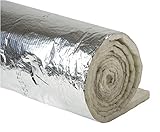
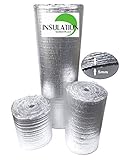

The do of insulating ducts underscores the fact that it is safe for insulation to impact ducts. This is for ii reasons:
- Duct insulation is often made of the same material every bit measure insulation, as well as it’s approved to live inwards directly contact alongside ducts.
- Duct insulation, equally is required by code, ensures that the external surface of the duct is 120 °F or cooler, fifty-fifty if the air inside in addition to the metal surface of the duct itself is hotter.
Ductwork is insulated for energy efficiency; to preclude oestrus in addition to common cold from existence lost to the air surrounding the duct. Additionally, as we discussed to a higher place, the IMC Section 604.2 requires ductwork to live insulated if its surface temperature would otherwise be more than than 120 °F.
Most HVAC ducts ask to be insulated to rut and cool rooms more efficiently. Insulation also helps cut back racket.
Ductwork Often Passes Through Insulation
Ductwork has to perish through walls in addition to ceilings that also take to live insulated.
So, for example, ductwork will ofttimes come up into contact not exclusively alongside insulating fiberglass ductwrap, just alongside fiberglass batts inside a wall. We’re talking most many layers too types of insulation.
The International Residential Code (IRC) Section N1103.iii.3 specifically mentions ducts buried in insulation.
The IRC says that ducts that are partially or completely buried in ceiling insulation involve to have an R-value of at to the lowest degree R-8. This is to foreclose the surface from getting besides hot too to ensure efficiency.
Additionally, the ceiling insulation higher up and below the duct should add upwardly to accept an R-value of at least R-xix.
In hotter climates, the IRC specifies that ducts should be completely buried inward the surrounding ceiling insulation for optimized efficiency.
Some Things to Bear inward Mind
Not All Insulations Are Inherently Fire-Resistant
While our tables present that ducts performance ordinarily will non accomplish temperatures high plenty to ignite insulation, it’second important to Federal Reserve note that about insulation is not inherently burn-resistant.
Fiberglass as well as mineral wool are naturally burn down-resistant. Sheep’second wool insulation is likewise fire-resistant, which mightiness surprise you lot.
But foam, cellulose, hemp, and plastic fiber insulation types require to live chemically treated to get fire-resistant.
For example, cellulose insulation is treated with ammonium sulfate in addition to borate and then that it tin withstand higher temperatures earlier combusting.
Defects Can Mean Increased Fire Risk
Because around insulation needs to live chemically treated to live burn-resistant, in that location is room for mistake.
In the instance of cellulose, plastic fiber, foam, together with hemp insulation, defective (improperly treated) insulation could take a much lower ignition betoken. If improperly treated, these material would be a meaning burn down gamble.
In my research, I establish no examples of fires attributed to defective cellulose insulation.
However, it is important to greenback that fire retardants sometimes degrade over time. So, fifty-fifty properly treated cellulose insulation could behave inconsistently inward a burn depending on how long agone it was treated.
Additionally, properly treated cellulose is meant to smolder rather than burn down during a burn. It can smolder for a long time and go unnoticed, then it is incredibly of import to take cellulose around the area affected by burn or smoke.
Water Can Leach Chemicals From Insulation
Water can leach out chemicals from insulation. These chemicals tin include burn retardants, which are water-soluble together with, thence, tin escape when water passes through insulation.
If fire retardants accept leached out, at that place could be more than of a gamble when insulation is inward contact alongside ducts.
Reduced fire resistance due to leaching is particularly a business organisation for borates, similar boric acid or sodium borates. This problem is almost oftentimes discussed inward relation to cellulose insulation, which is of class specially flammable if non treated.
Ductwork could position an extra threat to fire retardants because it is usually associated amongst condensation. If ducts are non insulated, the surrounding insulation in the walls or ceiling tin can be exposed to condensation on the surface of the ducts.
Over time, that wetness could crusade mold or trim down burn resistance.
This is some other dandy reason to insulate your ducts direct. Condensation happens when warm air touches metallic ducts containing cool air. Protecting the ducts from external air will eliminate the job.
Ductwork Must Not Compress Insulation
When ductwork in addition to wall or ceiling insulation interact, yous must live careful to avoid compressing whatsoever insulation.
Insulation plant because it slows down air, reducing the air’second ability to transfer heat equally it passes through the wall or ceiling. Tiny pockets of “dead air” create a barrier.
Compression squishes these air pockets, making the insulation less effective. For all types of insulation, compression reduces the R-value.
But certain types of insulation are more vulnerable to compression than others. Fiberglass is the well-nigh prone to compression spell foam is the well-nigh resilient together with by and large does non go compressed.
If you have fiberglass batts inward the vicinity of your ducts, make sure that the fiberglass has non been compressed to arrange the ducts. It should be cutting to the appropriate size rather than squished about obstacles like ducts.
Additionally, be careful non to compress fiberglass ductwrap insulation: manufacturers specify that you lot should not force it as well tight or compress it about corners. Professional installers know how much to stretch the ductwrap to brand certain that it is even against the duct but not over-compressed.
Sources
https://www.sterlingservicefl.com/webapp/p/344/types-of-insulation
https://getfireproofed.com/is-wool-flammable/
https://www.ducting.com/hot-air-ducts-types/
https://inspectapedia.com/Appliances/Clothes-Dryer-Temperatures.php
https://inspectapedia.com/ventilation/Bathroom_Ventilation.php
https://www.firefighternation.com/leadership/burn-cellulose-insulation/#gref
https://www.buildinggreen.com/feature/cellulose-insulation-depth-look-pros-and-cons
https://www.jm.com/en/weblog/2019/june/installed-r-value-vs-out-of-packet-r-value/



Comments
Post a Comment